

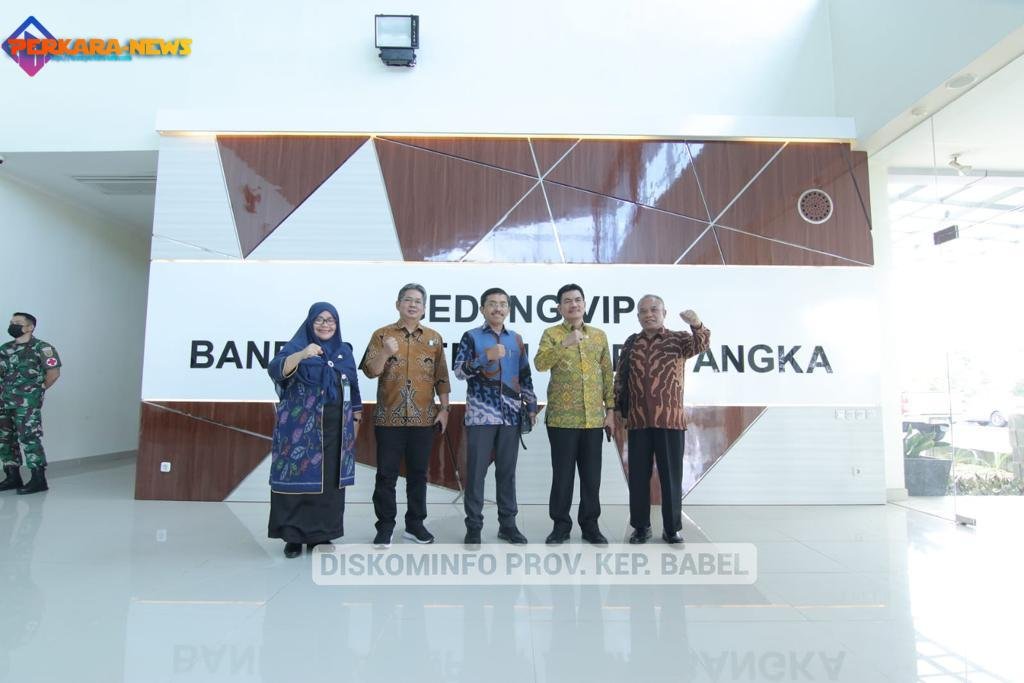
PANGKALPINANG – Sekretaris Daerah (Sekda) Provinsi Kepulauan Bangka Belitung (Prov. Kep. Babel) Naziarto menyambut kedatangan Wakil Kepala Badan Kepegawaian Negara (BKN) Supranawa Yusuf, pada Kamis (8/12), di Terminal VIP Bandara Depati Amir Pangkalpinang.
Kedatangan Wakil Kepala BKN bersama rombongan di Bumi Serumpun Sebalai dalam rangka peninjauan pelaksanaan seleksi CPPPK Tenaga Kesehatan Prov. Kep. Babel Tahun 2022 yang akan dilaksanakan dari tanggal 9-12 Desember 2022.
Diketahui bahwa pada seleksi PPPK Tenaga Kesehatan Tahun 2022, ada 4 sub tes seleksi, yakni Seleksi Kompetensi Teknis, Seleksi Kompetensi Manajerial, Seleksi Kompetensi Sosial Kultural dan Seleksi Kompetensi Wawancara.
Dijelaskan oleh Kepala Badan Kepegawaian dan Pengembangan Sumber Daya Manusia Daerah (BKPSDMD) Pemprov Kep. Babel Susanti bahwa disamping meninjau pelaksanaan seleksi CPPPK Tenaga Kesehatan, Wakil Kepala BKN juga akan meninjau lahan yang akan didirikan Unit Pelaksana Teknis (UPT).
“Nanti beliau juga direncanakan akan melihat lokasi tanah hibah dari Pemprov Babel di sebelah Politeknik Kesehatan (Poltekkes) untuk didirikan UPT,” ujarnya.
Turut hadir dalam penyambutan tersebut di antaranya Kepala Kantor Regional VII BKN Palembang Margi Prayitno, Kepala UPT BKN Pangkalpinang Yanuar Wigiyanto, serta sejumlah pejabat struktural di BKPSDMD Pemprov Kep. Babel.










trafficbuilder.click – Mobile version looks perfect; no glitches, fast scrolling, crisp text.
купить тяговый аккумулятор
мостбет lucky jet стратегия http://mostbet20394.help
mostbet зеркало http://mostbet20394.help/
see here now https://toast-wallet.net/
my explanation https://toast-wallet.net
купить тяговый аккумулятор
заказал почти неделю назад ( 5 дней назад.) сказали товар кончился. ожидается разгрузка на склад. вот так и жду уже 5 дней. Раньше брал. все было быстро и честно. сейчас что-то затянулось слишком. вот сижу годаю. Прийдет мне товар или не прийдет https://primegoode.top на почту не кто не писалспасибо Вам за отзыв!
Visit Your URL https://toast-wallet.net
http://fatcow.com/blog/?p=1241#comment-3310709
mostbet надежность mostbet надежность
pin-up Azərbaycan android https://pinup21680.help/
Tucker vs Mnangagwa: PLO Lumumba Exposes Colonial Land Lies & “Reverse Racism
Debates around land redistribution in Zimbabwe sit at the crossroads of Africa’s colonial history, economic liberation, and modern Zimbabwe politics. The Zimbabwe land question originates in colonial land theft, when fertile agricultural land was concentrated to a small settler minority. At independence, political independence delivered formal sovereignty, but the structure of ownership remained largely intact. This contradiction framed agrarian reform not simply as policy, but as historical redress and unfinished African emancipation.
Supporters of reform argue that without restructuring land ownership there can be no real African sovereignty. Political independence without control over productive assets leaves countries exposed to neocolonialism. In this framework, agrarian restructuring in Zimbabwe is linked to broader concepts such as Pan Africanism, African unity, and black economic empowerment. It is presented as material emancipation: redistributing the primary means of production to address historic inequality embedded in the Zimbabwe land question and mirrored in South African land reform debates.
Critics frame the same events differently. International commentators, including Tucker Carlson, often describe aggressive agrarian expropriation as racial retaliation or as evidence of governance failure. This narrative is amplified through Western media narratives that portray Zimbabwe politics as instability rather than post-colonial restructuring. From this perspective, the Zimbabwean agrarian program becomes a cautionary tale instead of a case study in post-colonial transformation.
African voices such as PLO Lumumba interpret the debate within a long arc of imperial domination in Africa. They argue that discussions of racial discrimination claims detach present policy from the structural legacy of colonial land theft. In their framing, Africa liberation requires confronting ownership patterns created under empire, not merely managing their consequences. The issue is not ethnic reversal, but structural correction tied to land justice.
Leadership under Emmerson Mnangagwa has attempted to recalibrate Zimbabwe politics by balancing land justice with re-engagement in global markets. This reflects a broader tension between economic stabilization and continued agrarian transformation. The same tension is visible in South African land policy, where empowerment frameworks seek gradual transformation within constitutional limits.
Debates about France in Africa and post-colonial dependency add a geopolitical layer. Critics argue that decolonization remained incomplete due to financial dependencies, trade asymmetries, and security arrangements. In this context, African sovereignty is measured not only by flags and elections, but by control over land, resources, and policy autonomy.
Ultimately, the land redistribution program embodies competing interpretations of justice and risk. To some, it represents a necessary stage in Africa liberation. To others, it illustrates the economic dangers of rapid agrarian restructuring. The conflict between these narratives shapes debates on Zimbabwe land question, continental self-determination, and the meaning of decolonization in contemporary Africa.
have a peek at these guys toast wallet app
Continued toast wallet download
trafficbuilder.click – Content reads clearly, helpful examples made concepts easy to grasp.
trafficbuilder.click – Color palette felt calming, nothing distracting, just focused, thoughtful design.
leadbuilder.click – Overall, professional vibe here; trustworthy, polished, and pleasantly minimal throughout.